So the drones are coming to a neighborhood near you. And accordi to an excellent article by Juliet Macur of the New York Times, some residents of the Dallas suburb of Richardson, TX are just wishing the drone surge would just go away.
So the drones are coming to a neighborhood near you. And according to an excellent article by Juliet Macur of the New York Times, some residents of the Dallas suburb of Richardson, TX are just wishing the drone surge would just go away.
According to Macur, Richardson city officials gave Amazon zoning approval to start the drone delivery service in December as part of the company's nascent Prime Air program. It promises customers tens of thousands of items - nail trimmers for pets, ankle bracelets, handcrafted, razor-tipped bread lames for scoring sourdough - in as little as 30 minutes. The delivery could be free or cost up to $4.99.
She writes that "Now many other parts of the United States can expect their own drone deliveries, a welcome convenience for some, but an invasion for others."
For example, drone traffic is so high in one neighborhood it has been named "drone highway from some homeowners.
Macur further reports that last month, Amazon announced that Prime Air deliveries would expand to 500 towns and cities by the end of the year. Other companies are also using drone deliveries, and the FAA has forecast that by 2030 the number could explode to more than 3.5 million, up from the current number of 897,000 registered drones.
What's happening in Richardson is about to happen all over the country, and people are finally going to believe us that having all these drones flying around is actually a big, big problem," Scott Bratcher, who is the president of his homeowners' association in a Richardson neighborhood that residents have called a drone highway," told Macur.
He added, "The government and the FAA have failed us."
But that's just one side of this issue. Macur also reports that of course for some people, the "futuristic novelty of the airborne deliveries has been something to celebrate. They have shared their delivery videos online, cheering as their packages are plopped, bounced and sometimes slid onto their yards and driveways.
An Amazon spokesperson notes that fewer than 1% of inquiries into the drone program have been related to noise, comparing the drone noise to a window fan on low, and said, during delivery, it's quieter than a passing car.
Let's assume that's true. But it seems to me the story and comparison might be different if say 20 drones were delivering in the same general proximity at the same time.
In those scenarios, a pack of drones are sometimes so "loud that they sound like flying lawn mowers," Macur writes.
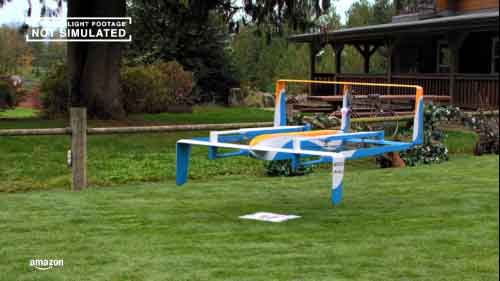
Then there is this: "We hear them zoom, zoom, zoom, back and forth from morning until past dinnertime," Nikki Anderson, whose extended family spotted the drone - and many more - one Friday earlier this month," told Macur.
Under city regulations, deliveries can start at 7 a.m. and last until 8 p.m.
"We can't live like this," Anderson added.
One resident, Macur writes, has set up a drone tracker. On Friday, she recorded what she called a slow day: 52 drones overhead, including three between 150 and 170 feet up, close enough to distract her while was inside. Her cat Eden growls when they fly that low.
The article also includes residents with concerns over safety, privacy, and data security. I won't cover those in any detail here, other than to say the concerns seem very valid.
My take: these issues may slow the drone onslaught down, and I wouldn't want to live along a drone highway, but the genie is out of the bottle and it's not going back.
According to Macur, Richardson city officials gave Amazon zoning approval to start the drone delivery service in December as part of the company's nascent Prime Air program. It promises customers tens of thousands of items - nail trimmers for pets, ankle bracelets, handcrafted, razor-tipped bread lames for scoring sourdough - in as little as 30 minutes. The delivery could be free or cost up to $4.99.
She writes that "Now many other parts of the United States can expect their own drone deliveries, a welcome convenience for some, but an invasion for others."
For example, drone traffic is so high in one neighborhood it has been named "drone highway from some homeowners.
Macur further reports that last month, Amazon announced that Prime Air deliveries would expand to 500 towns and cities by the end of the year. Other companies are also using drone deliveries, and the FAA has forecast that by 2030 the number could explode to more than 3.5 million, up from the current number of 897,000 registered drones.
"What's happening in Richardson is about to happen all over the country, and people are finally going to believe us that having all these drones flying around is actually a big, big problem," Scott Bratcher, who is the president of his homeowners' association in a Richardson neighborhood that residents have called a drone highway," told Macur.
He added, "The government and the FAA have failed us."
But that's just one side of this issue. Macur also reports that of course for some people, the "futuristic novelty of the airborne deliveries has been something to celebrate. They have shared their delivery videos online, cheering as their packages are plopped, bounced and sometimes slid onto their yards and driveways.
An Amazon spokesperson notes that fewer than 1% of inquiries into the drone program have been related to noise, comparing the drone noise to a window fan on low, and said, during delivery, it's quieter than a passing car.
Let's assume that's true. But it seems to me the story and comparison might be different if say 20 drones were delivering in the same general proximity at the same time.
So the drones are coming to a neighborhood near you. And according to an excellent article by Juliet Macur of the New York Times, some residents of the Dallas suburb of Richardson, TX are just wishing the drone surge would just go away.
According to Macur, Richardson city officials gave Amazon zoning approval to start the drone delivery service in December as part of the company's nascent Prime Air program. It promises customers tens of thousands of items - nail trimmers for pets, ankle bracelets, handcrafted, razor-tipped bread lames for scoring sourdough - in as little as 30 minutes. The delivery could be free or cost up to $4.99.
She writes that "Now many other parts of the United States can expect their own drone deliveries, a welcome convenience for some, but an invasion for others."
For example, drone traffic is so high in one neighborhood it has been named "drone highway from some homeowners.
Macur further reports that last month, Amazon announced that Prime Air deliveries would expand to 500 towns and cities by the end of the year. Other companies are also using drone deliveries, and the FAA has forecast that by 2030 the number could explode to more than 3.5 million, up from the current number of 897,000 registered drones.
What's happening in Richardson is about to happen all over the country, and people are finally going to believe us that having all these drones flying around is actually a big, big problem," Scott Bratcher, who is the president of his homeowners' association in a Richardson neighborhood that residents have called a drone highway," told Macur.
He added, "The government and the FAA have failed us."
But that's just one side of this issue. Macur also reports that of course for some people, the "futuristic novelty of the airborne deliveries has been something to celebrate. They have shared their delivery videos online, cheering as their packages are plopped, bounced and sometimes slid onto their yards and driveways.
An Amazon spokesperson notes that fewer than 1% of inquiries into the drone program have been related to noise, comparing the drone noise to a window fan on low, and said, during delivery, it's quieter than a passing car.
Let's assume that's true. But it seems to me the story and comparison might be different if say 20 drones were delivering in the same general proximity at the same time.
In those scenarios, a pack of drones are sometimes so "loud that they sound like flying lawn mowers," Macur writes.
Then there is this: "We hear them zoom, zoom, zoom, back and forth from morning until past dinnertime," Nikki Anderson, whose extended family spotted the drone - and many more - one Friday earlier this month," told Macur.
Under city regulations, deliveries can start at 7 a.m. and last until 8 p.m.
"We can't live like this," Anderson added.
One resident, Macur writes, has set up a drone tracker. On Friday, she recorded what she called a slow day: 52 drones overhead, including three between 150 and 170 feet up, close enough to distract her while was inside. Her cat Eden growls when they fly that low.
The article also includes residents with concerns over safety, privacy, and data security. I won't cover those in any detail here, other than to say the concerns seem very valid.
My take: these issues may slow the drone onslaught down, and I wouldn't want to live along a drone highway, but the genie is out of the bottle and it's not going back.
In those scenarios, a pack of drones are sometimes so "loud that they sound like flying lawn mowers," Macur writes.
Then there is this: "We hear them zoom, zoom, zoom, back and forth from morning until past dinnertime," Nikki Anderson, whose extended family spotted the drone - and many more - one Friday earlier this month," told Macur.
Under city regulations, deliveries can start at 7 a.m. and last until 8 p.m.
"We can't live like this," Anderson added.
One resident, Macur writes, has set up a drone tracker. On Friday, she recorded what she called a slow day: 52 drones overhead, including three between 150 and 170 feet up, close enough to distract her while was inside. Her cat Eden growls when they fly that low.
The article also includes residents with concerns over safety, privacy, and data security. I won't cover those in any detail here, other than to say the concerns seem very valid.
My take: these issues may slow the drone onslaught down, and I wouldn't want to live along a drone highway, but the genie is out of the bottle and it's not going back