| |
|
|
| |
|
|
 |
Supply
Chain by the Numbers |
|
| |
|
|
| |
Oct. 22, 2026
|
|
| |
|
|
| |
|
|
| |
|
|
| |
Port Warehouses Vacancies Up. eTailers Tightening Returns Policies. Accenture Partners on AMR StandardsUS Manufacturing in September Up a Little
|
|
| |
| |
| |
| h |
38 Million |

|
| That’s the current average number of days large ecommerce brands allow for returns, according to data from ecommerce returns platform Loop Returns, as cited in an article on the topic in the UK’s Daily Mail this week. That’s down from 43 days on average two years ago, as etailers look to reduce their huge returns costs. Returns cost an average of 27% of a product's purchase price to process, according to returns-management firm Optoro. “Shoppers are increasingly being charged to return unwanted purchases, given less time to send them back and – in some cases – warned that too many returns could put future refunds in jeopardy,” the Daily Mail says. |
|
| |
| |
| |
|
|
|
| |
| |
|
|
|
That is the potential reduction in the time it will take to deploy physical AI platforms in automated factories and warehouses, consulting firm Accenture said this week as it announced it will collaborate with a German certification organization TUV SUD. By working with TUV SUD, which is a testing, inspection, and certification organization, Accenture said it can now help companies safely deploy physical AI equipment such as autonomous mobile robots (AMRs) alongside human workers faster. Specifically, the partners’ “Physical AI Safety Suite” will allow clients to navigate the intricate web of standards for adopting physical AI-enabled automation solutions. |
| |
| |
| |
| |
| |
| |
|
|
|
.
|
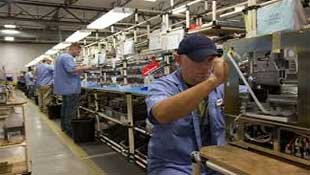 |
| That was the level of US manufacturing output in September, as represented in the monthly index from the Federal Reserve Bank, which was released last week. That was flat from August (with a score of 98.2), as the index has been in range that has seen it hover around the 96 -98 level for more than six months, with no real growth, but not recessionary declines either. However, September output was up just 1.1% versus the same period in 2025. But at an index level of 98.2, it means US manufacturing output is still below that of the baseline year of 2017 (index = 100) now nine years later. It is also well below the all-time high of about 108, reached in late 2007. |
| |
|
|
|
|
| |
|
 |
|
| |
 |
![]() |
 |
|
| |
 |
Feedback |
|
|
|
![]()
|
No Feedback on this article yet.
|
|
![]() |
|
|
|
![]() |
 |
![]() |
 |
|
| |


