| |
|
|
| |
 |
|
| |
|
|
| |
 Distribution and Materials Handling Focus: Our Weekly Feature Article on Topics Related to Distribution Management and Material Handling Strategies and Technologies Distribution and Materials Handling Focus: Our Weekly Feature Article on Topics Related to Distribution Management and Material Handling Strategies and Technologies |
|
| |
|
|
| |
|
 |
|
| |
Surprisingly, Reducing Distribution Costs Often not the Leading Factor for Companies to Adopt New Warehouse Management System Technology
|
|
| |
SCDigest Editorial Staff
| SCDigest Says: |
 Sometimes, a company’s business or distribution strategies change in such a way that its existing WMS or other distribution center technology simply is not sufficient for the job. Sometimes, a company’s business or distribution strategies change in such a way that its existing WMS or other distribution center technology simply is not sufficient for the job.
What do you say? Send us your comments here |
The following article was taken from the recent Supply Chain Digest Letter on Warehouse Management Systems (WMS). To download an electronic version of the information-packed SCD Letter on WMS, or to access a wealth of other WMS-related information, visit our Warehouse Management System Resources Page.
So what are the real drivers of Warehouse Management System adoption? Surprisingly, the catalyst is often the desire to reduce distribution costs – though in the end, that always plays a key role.
But often, factors such as rapid growth and changing supply chain models are the immediate triggers for a new WMS project.
(Distribution and Materials Handling Article - Continued Below) |
|
| |
|
CATEGORY SPONSOR: LONGBOW ADVANTAGE - JDA SUPPLY CHAIN CONSULTANTS |
| |
Download Longbow Advantage
Business Briefs
The Keys to WMS Success,
Maximizing JDA WMS
Performance and More

|
|
| |
|
|
|
|
| |
Distribution and Materials Handling Article - Continued
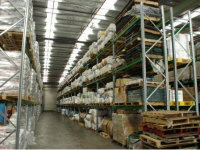
- Rapid Company Growth: As companies expand, especially midsize companies that are growing at very high rates, order fulfillment can quickly become an issue. While logistics costs are usually rising faster than sales for companies in this situation, as distribution processes become increasingly inefficient, the even more critical issue is often customer service. High growth companies reach a point where they can no longer fulfill orders predictably without a new infusion of technology in the DC.
- Technology Obsolescence: Many companies are still running Warehouse Management Systems installed years ago – some times as far back as the early 1990s. These systems might have been developed in-house, or were purchased from a WMS vendor now long gone and have become “legacy systems” supported internally. At some point, the cost, inflexibility, or challenges of maintaining skills sets to support these systems drive companies to seek a more current software platform.
- Significant Logistics Strategy Changes: Sometimes, a company’s business or distribution strategies change in such a way that its existing WMS or other distribution center technology simply is not sufficient for the job. The most common example would be in moving from a mostly manual to a highly automated distribution center. Another might be a merger or acquisition, in which a combined distribution operation emerges with significantly different requirements. Another example might be moving from plant-based distribution to a consolidated “mixing center” approach.
- Regulatory Changes: Sometimes, a company may enter a highly regulated market (e.g., medical devices) or there may be regulatory changes (such as food traceability) that require a level of data capture and control beyond a company’s current system capabilities.
- Cost Savings: The opportunity to reduce costs was the primary driver of WMS through the mid-1990s. As more and more companies adopted some form of WMS in the last decade, reducing distribution costs declined relative to the other factors as the primary driver of WMS adoption.
Recently, however, the tremendous pressure for continuous improvement combined with the new costs savings opportunities from the new generation WMS solutions that integrate labor management, slotting, TMS, etc. has more companies rethinking the ROI available from a WMS replacement.
The level of savings realized from a WMS implementation of course varies significantly based on many factors, including size and scope of a facility, existing level of automation and process maturity, and other factors.
What do you see as the most common triggers to WMS adoption? Let us know your thoughts at the Feedback button below. |
|
| |
|
|
|
 |
|
| |
|
|
| |
|
|


